Robotic End Effector System
This project focuses on the future of warehouse automation. Our team was tasked with designing and prototyping an end-effector for a robotic Q-Arm, as well as implementing software to process orders and manage accounts.
Summary
A course based project with real world problems.
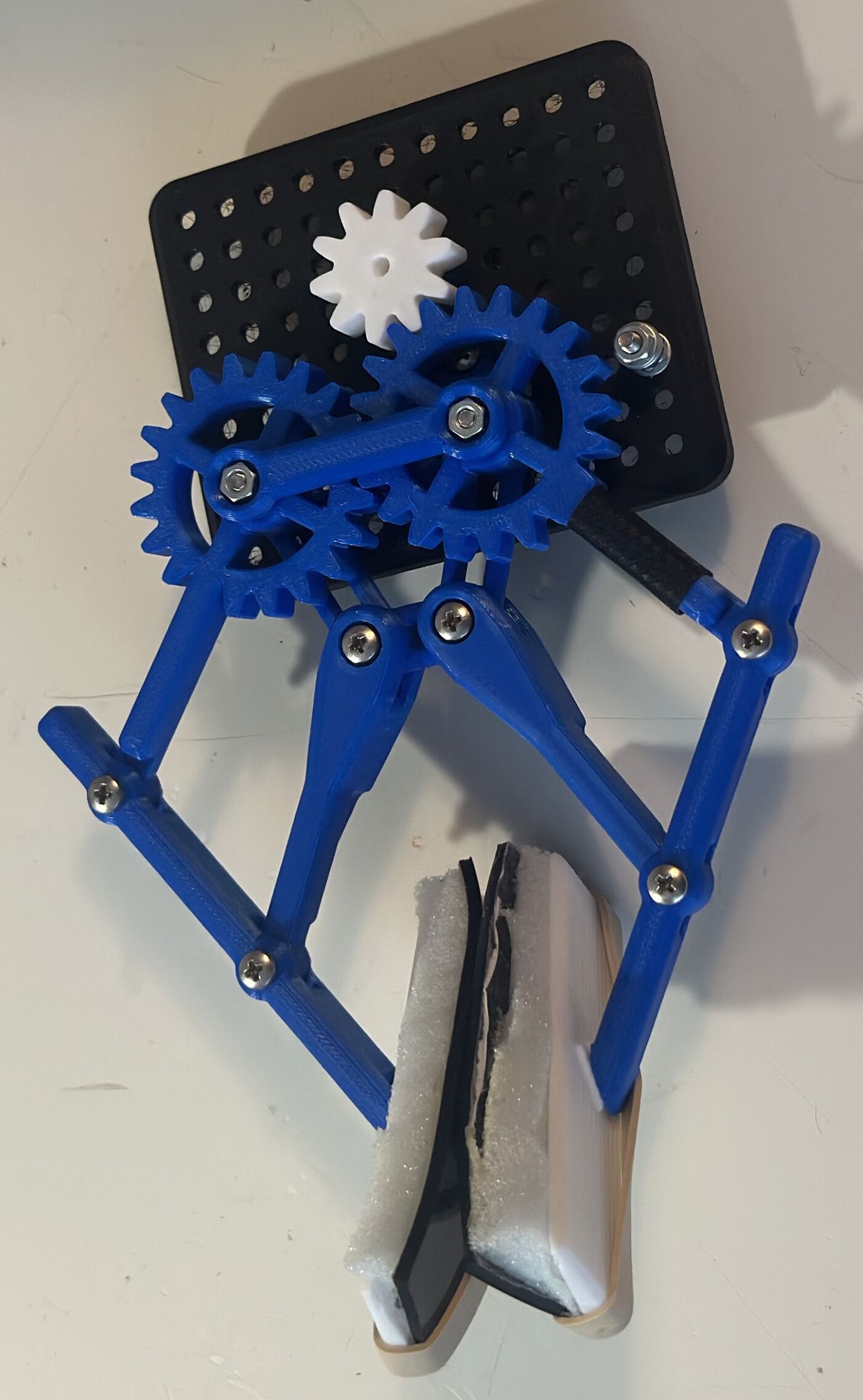
Our team was tasked with improving warehouse efficiency and automation. Through many design iterations, our team created and tested a robotic end-effector system and coding infrastructure for a Q-Arm.
We worked from the initial planning stage through multiple prototype iterations while making refinements to both the mechanical design and computer code. We navigated through the entire engineering process, documenting our progress along the way.
The final system successfully picked up all required objects, including the highest-level bowl and witch hat. The software and mechanism operated error free during the final demonstration.
Problem Statement
The system must securely grip, transport, and release objects of different varieties using a servo-driven end effector mounted to a Q-Arm. It also must include software that manages user authentication, product scanning, pricing, order processing, and robotic arm control. The final design must operate as a single integrated system in which all actions occur automatically with the scan of a barcode.
The design must fit on the provided platform and servo interface, weigh less than 100 grams, and be manufactured using available resources (3D printing), while being functional and reliable.
Timeline of Project (Oct. 7 – Dec. 2, 2025)
Design Process
Contributions
For the initial mechanism design, each of the four team members developed an individual concept through sketches and 3D models. We then selected one concept and repeatedly printed, tested, and refined it to ensure the final mechanism was both functional and reliable.
On the software side, team members individually developed functions such as authenticate, sign up, lookup products, customer summary, and complete order using Python and CSV data files. We then developed the pack products and main functions, which integrated all individual components into a single working system.
When the team evaluated the initial design concepts, my design was selected because it was the most viable and easiest to modify. I became the primary developer for the CAD design, as I had the strongest understanding of the 3D model.
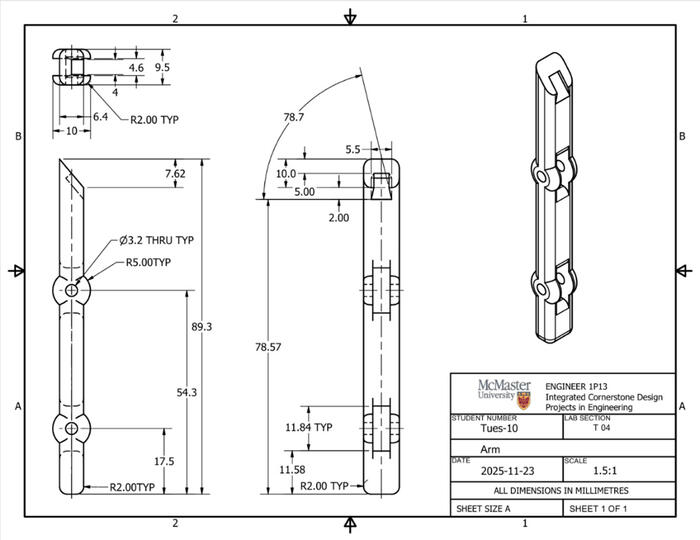
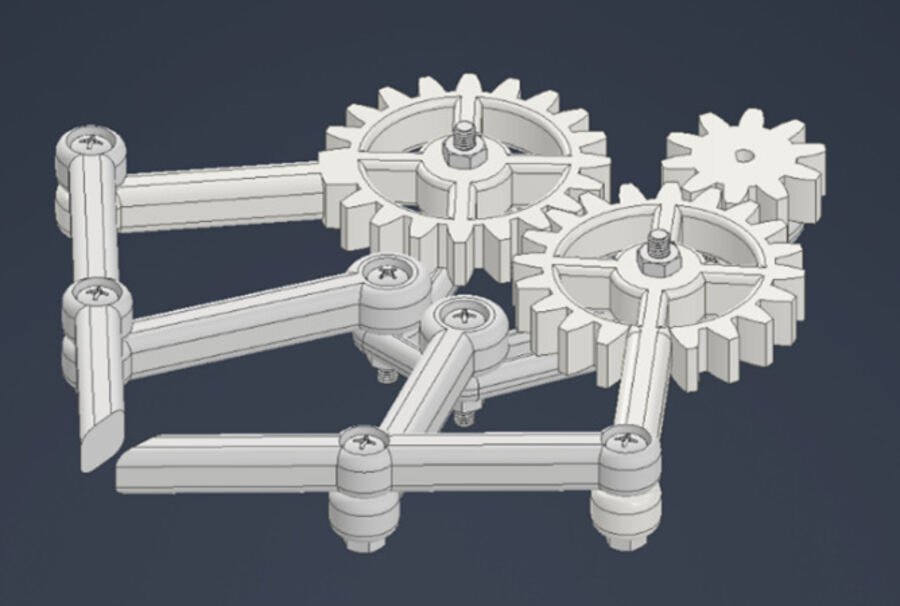
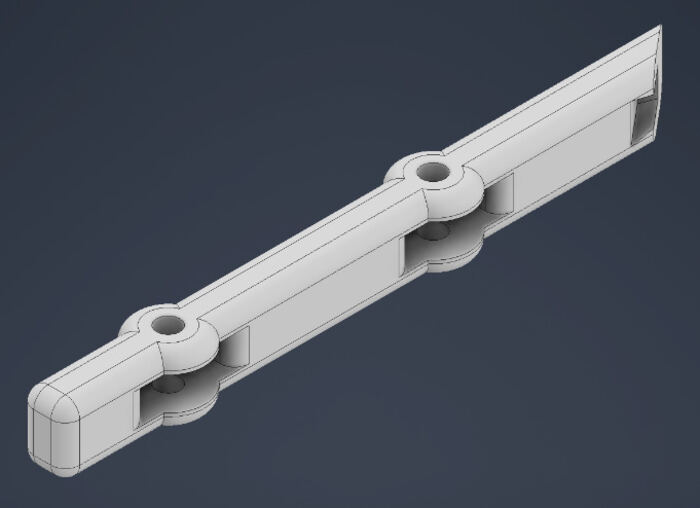
As the design evolved, I contributed several important changes, including interlocking the joints rather than overlapping them and adding a dovetail to the arms to simplify gripper replacement. Through multiple iterations, the system progressed from an early proof-of-concept that couldn’t lift objects to a final design that successfully picked up even the most difficult items.
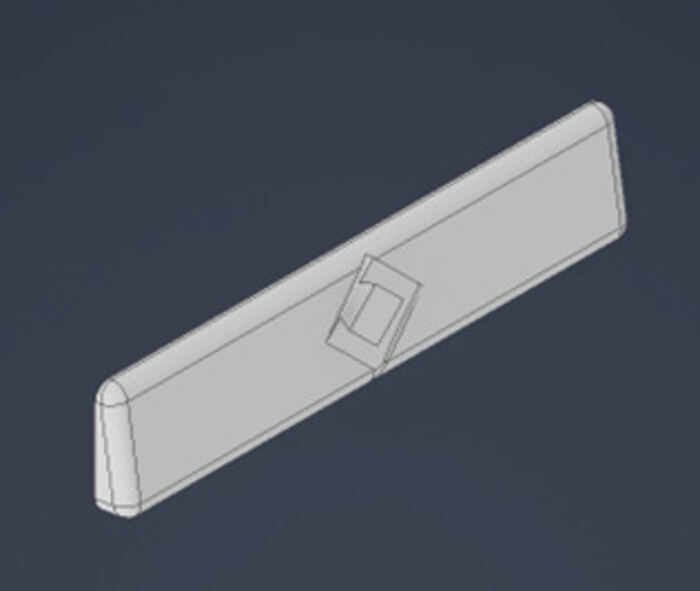
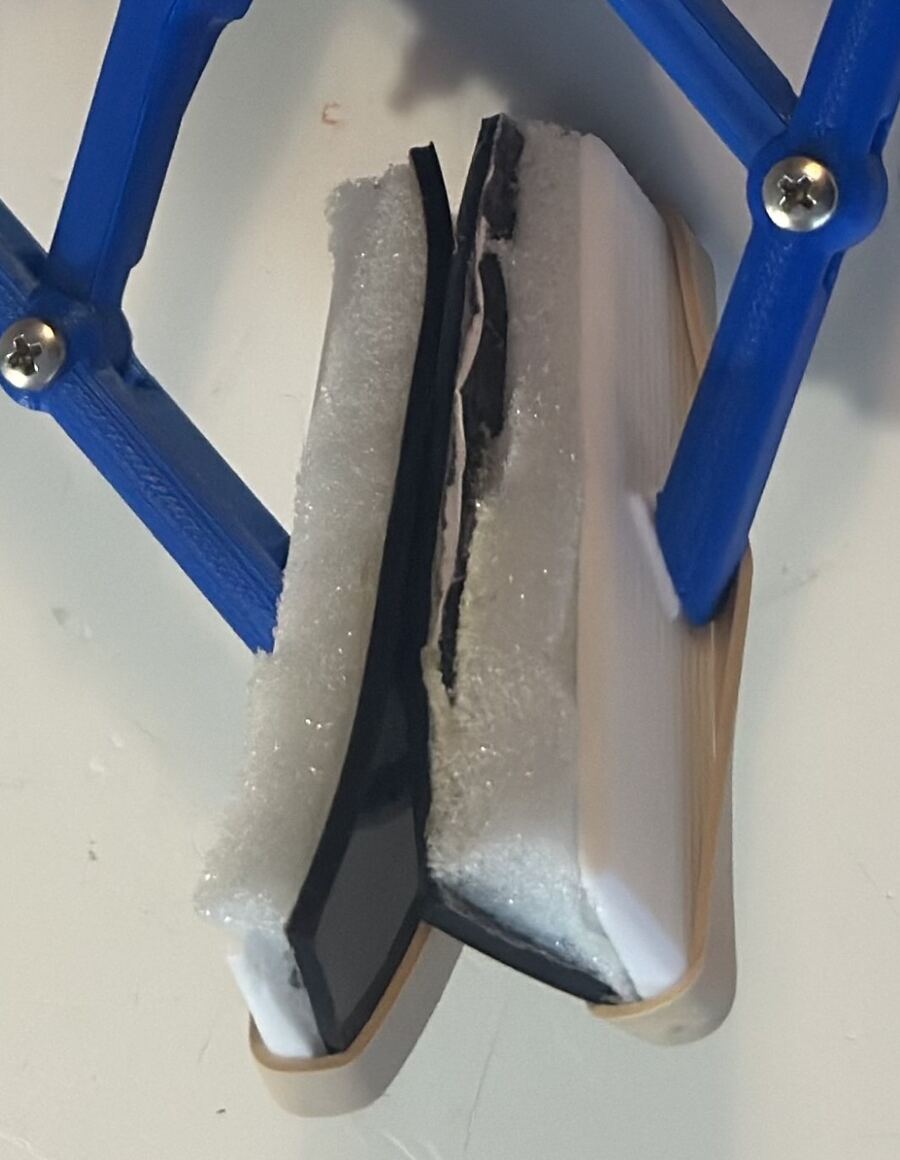
When selecting a material for the grippers, a team member initially suggested rubber tape, which provided some grip but limited capabilities. I improved this by adding memory foam behind the tape and securing it with rubber bands. This allowed the grippers to better conform to object shapes, while the rubber bands created a slight dome that introduced a pinching point, significantly increasing grip reliability.
Order Processing & Arm Control
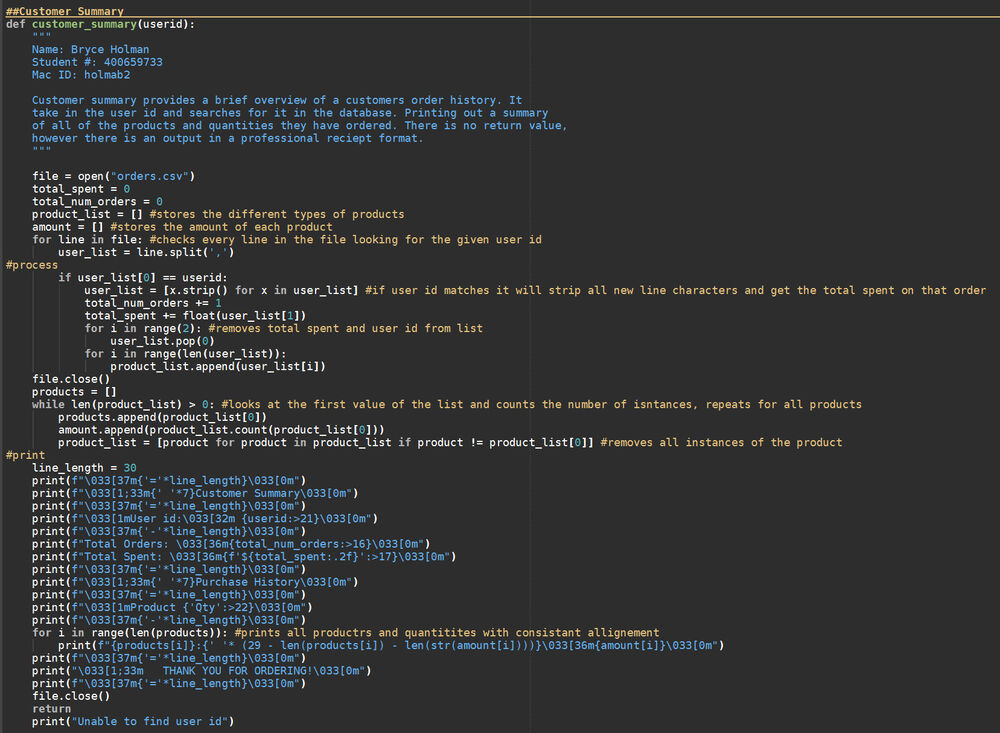
I was responsible for the customer summary function, which reviewed all past orders from a CSV file and generated a summary of the products purchased, including quantities and the total amount spent. Integrating all the team's functions was another job of mine, ensuring each function could communicate and perform with the others allowing for successful automation.
- sign up & authenticate · log in/out
- lookup products · pricing & availability
- customer summary · purchase history
- complete order · receipt
- pack products · Q-Arm integration
- main · function integration & automation (Bryce)
Final Work
Video Demonstration
This video shows the final mechanism picking up the bowl, which is the highest-level object. Initially, the bowl could not be picked up in its original orientation, so we decided on an alternative solution. The bowl was flipped and re-grasped, allowing for a significantly stronger grip.
Demonstration of final end-effector picking up level 4 bowl.
Code File
The attached folder contains the final code for the project, including functions developed both individually and collaboratively as a team. I developed the customer summary function and played a key role in integrating all functions into a single working system. The required CSV files used for the program to operate are also included. This is the exact code imported into the Q-Arm interface for the demonstration.
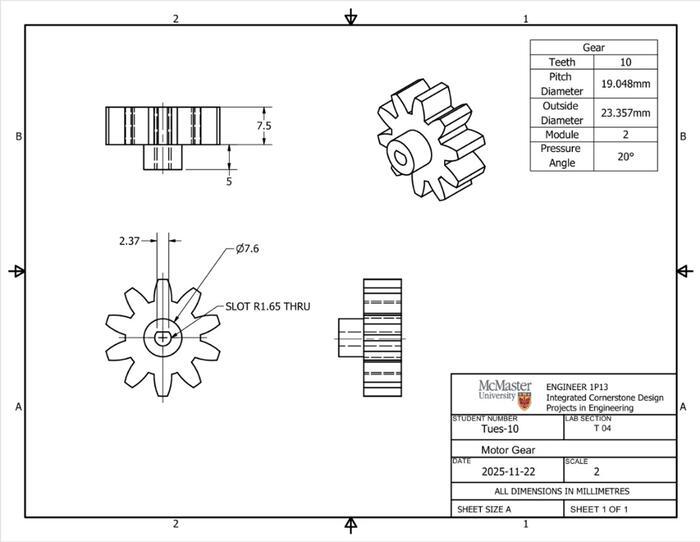
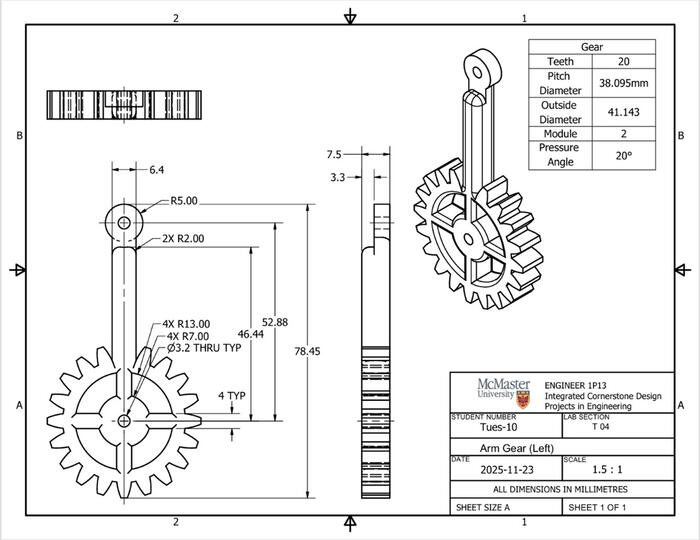
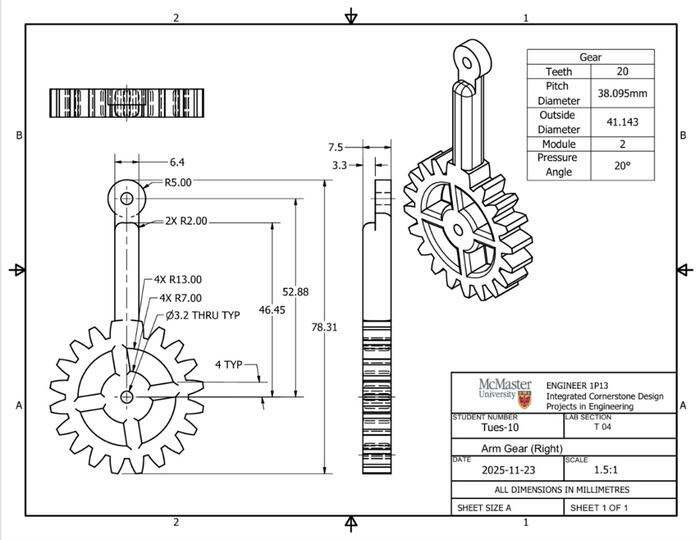
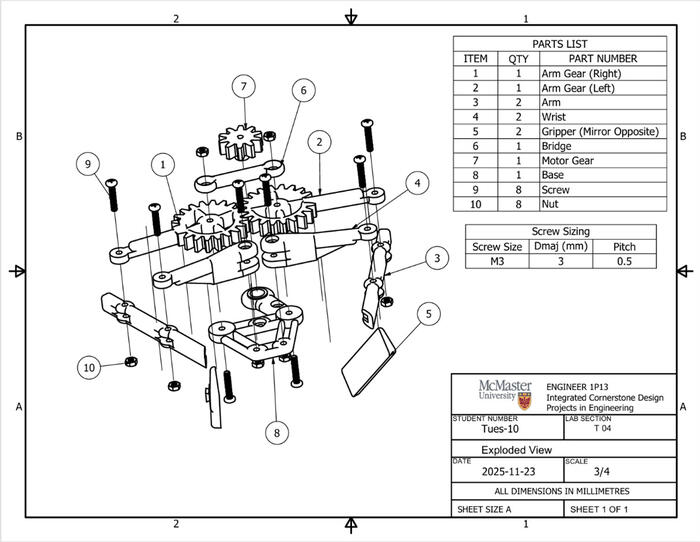
Dimensioned Engineering Drawings
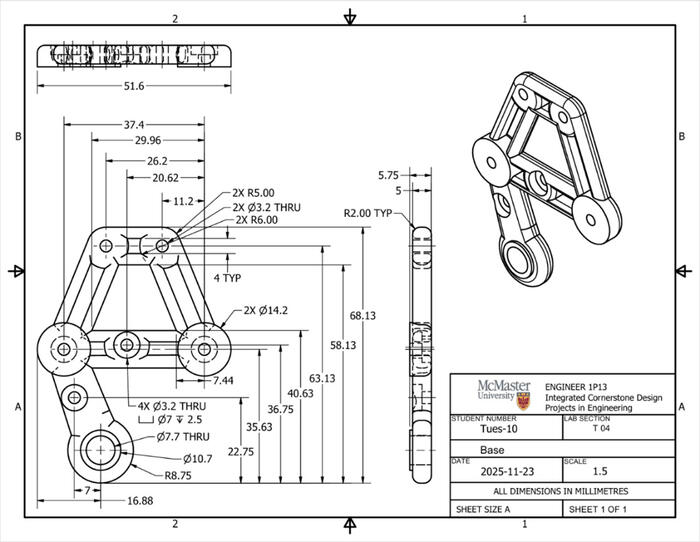
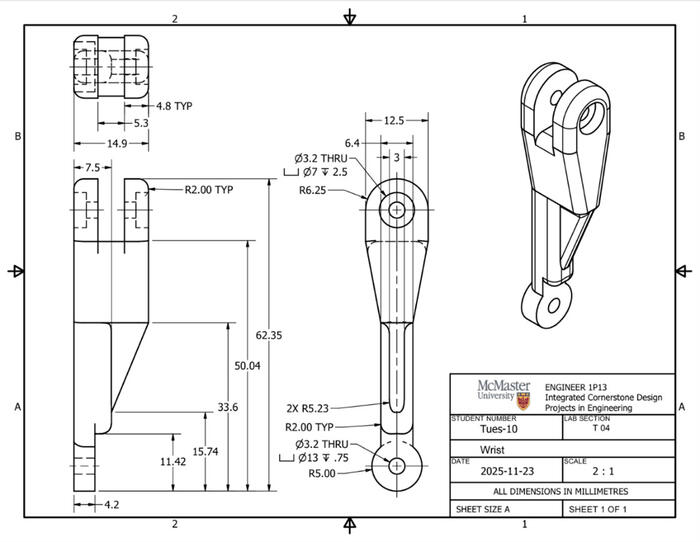
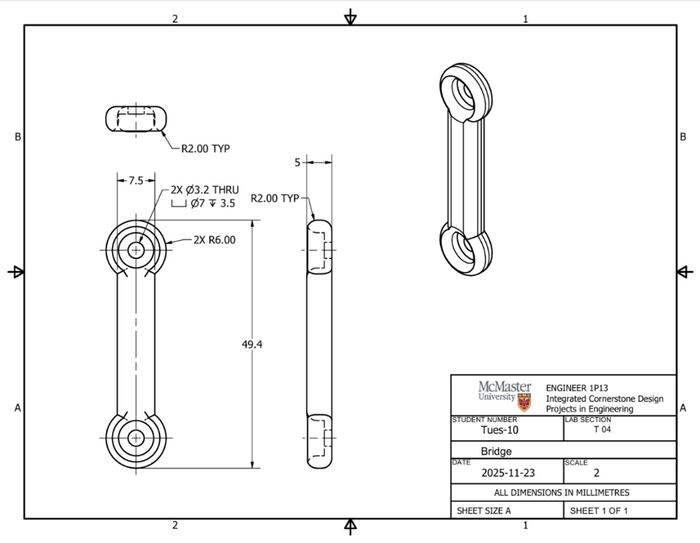
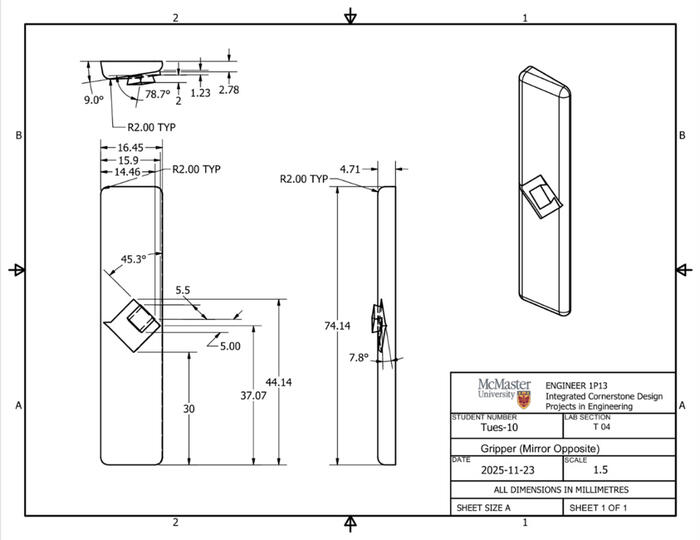
The following drawings showcase the final mechanical design and fully dimensioned components of the end-effector system.